
Don’t let paperwork delay your vision. Get a Free Consultation
Utility coordination is the part of a project nobody sees until it goes wrong. We handle the water, sewer, power, fire, and right-of-way conversations for you, so a missing sign-off doesn’t hold up your permit or your move-in date.
Your building permit is only one approval. Before the city issues it, the water utility may need to confirm service. Before you can move in, the power company has to energize the new panel. In between, the fire department, the sewer reviewers, and the transportation department may all want a say.
Each of these groups has its own forms, its own queue, and its own way of saying “not yet.” Homeowners and small builders usually find out about them one at a time, often when the project is already waiting. Good utility coordination flips that around: every agency is on the calendar from the start.
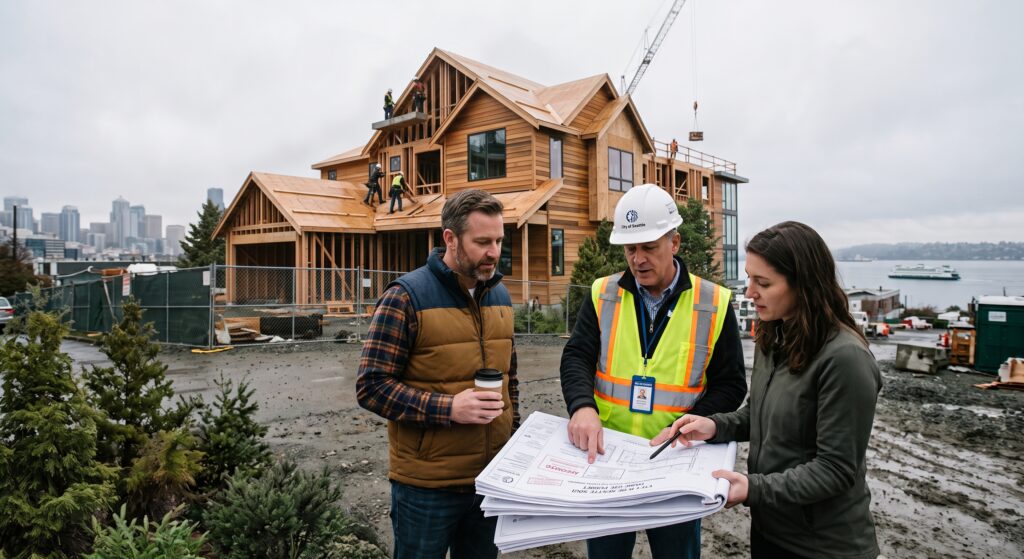
Most residential projects in the Seattle area touch at least four of these. Our utility coordination covers all of them: we know who to call, what they need to see, and when to ask.
SDCI in Seattle, or the local building department elsewhere. We line up their utility questions with the rest of your plan review.
Water availability, meter sizing, and new or upgraded service. In Seattle, this means Seattle Public Utilities.
Side sewer permits, capacity questions, and where stormwater goes. Often the first thing a reviewer asks about.
New service, panel upgrades, and pole or transformer work with Seattle City Light or PSE. Lead times can be long.
Hydrant distance, fire flow, and access for crews. These can add sprinklers or change where a new home sits.
Curb cuts, driveway approaches, and work in the street or sidewalk. In Seattle, that's SDOT street use permits.
King County and neighboring cities have their own utility districts and rules. We sort out who's responsible first.
Already waiting on a utility or a reviewer? Send us what you have. We'll find out where it's stuck and what it takes to move it.
None of these are rare. We see them on new homes, backyard cottages, and plain additions alike. They’re also easy to avoid when someone is watching for them from the first week.
Each utility publishes its own requirements, and they change. For water and sewer service in the city, Seattle Public Utilities is the place to start. For everything else, it helps to have someone who has already made the calls.
Our rule: utility coordination starts in week one. Every utility gets contacted in the first two weeks of a project, even if their part comes much later.
If the main in front of the lot is too small or too far, you may need an extension. Finding that out after design is expensive.
New electrical service often needs a design from the utility. Start it at permit, not when the electrician shows up.
A new unit or extra bathrooms can push an old line past what it can handle. A scope and a quick review settle it.
A home deep in a lot or far from a hydrant may need sprinklers. Better to price that in early than discover it at review.
A new driveway or utility trench in the street needs its own permit. It's a separate review with its own timeline.
Good utility coordination is mostly discipline. We treat every agency like a member of the project team, and each one gets a clear request, a named contact, and a follow-up date.
We list each agency and utility your project touches, what they’ll need, and when their answer affects the schedule.
When a question could change the design, we ask it in a meeting before submittal and get the answer in writing.
We prepare and track the utility applications, answer reviewer questions, and keep pushing until each one is signed off.
You get a short update: what’s approved, what’s pending, and what’s next. No chasing us for news.
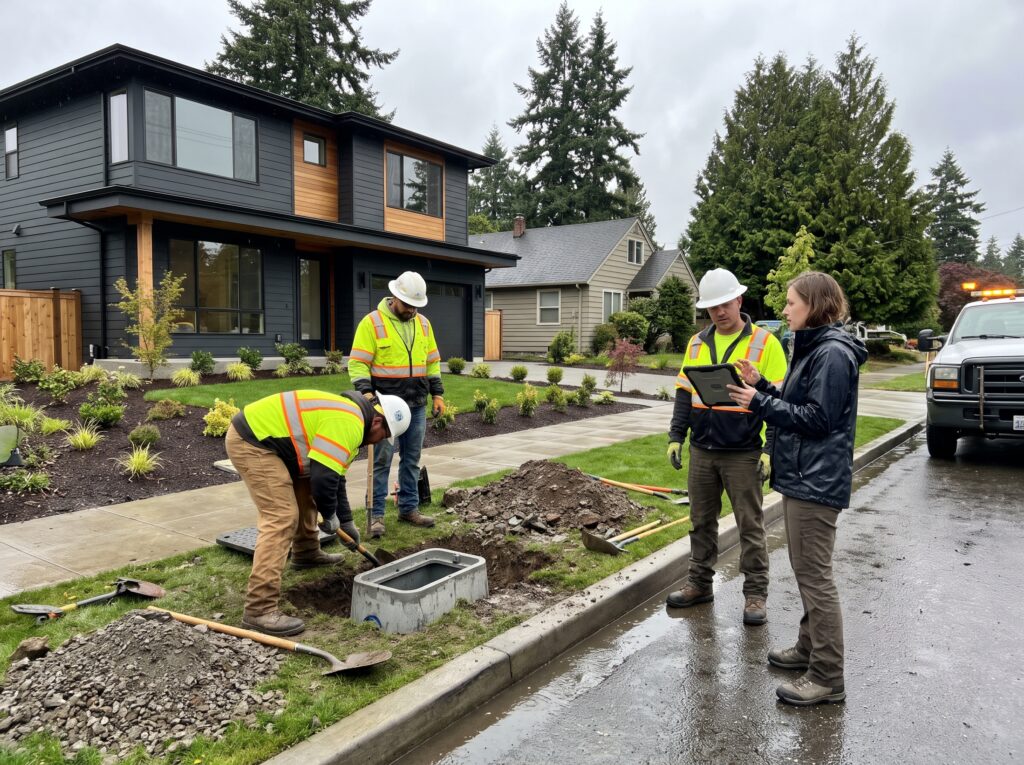
Everything between your project and the agencies that serve the property: water, sewer, drainage, power, fire access, and work in the street. We figure out which ones apply, prepare the requests, attend the meetings, and follow up until each approval is in hand.
In Seattle, it’s a document from Seattle Public Utilities that confirms water service is available for your project, and on what terms. It’s typically needed before a building permit for new construction. If the existing main isn’t adequate, the certificate will say what has to be built first, which is exactly why we request it early.
It varies a lot. A simple panel upgrade can be quick. A new service that needs a utility design, a new pole, or a transformer can take months. That’s why we open the request with the power company around the time you apply for the building permit, not once the walls are up.
Often, yes. Adding a bathroom, a kitchen, or a second unit can change your water meter size, your sewer load, or your electrical service. A small addition may only need one quick check. A backyard cottage or a full second story usually needs several.
Yes. A lot of our work starts that way. Send us the application numbers and any letters you’ve received. We’ll find out where it’s sitting, what’s missing, and what it will take to move it. If the issue is on the permit side, our construction permit support team can step in too.
Yes. We work across King County and nearby cities. Outside Seattle, water and sewer are often run by separate districts, and the first step is confirming who actually serves your lot. We handle that before anything else.
Utility fees, connection charges, and any main extension costs are paid by the property owner directly to the utility. Our fee covers the coordination work. We’ll tell you about expected utility costs as early as we can, so they’re in your budget before you commit to a design.
Tell us where the property is and what you’re building. We’ll list the agencies involved, flag the ones that tend to slow things down, and show you how we’d handle each one.